Every Great RPG the PSP Ever Released, Ranked
The PSP punched well above its weight as an RPG platform. These are the best games that proved a handheld could deliver the same depth as any home console.
Sony's PlayStation Portable launched in 2005 with a promise that home console gaming could fit in your pocket, and for RPG fans it delivered on that promise more completely than almost anyone expected. The library that accumulated over the following years drew from three distinct sources: original games built specifically for the hardware, ports and remasters of PS1 classics that found new audiences on the smaller screen, and enhanced versions of games that had previously been Japan-only releases finally reaching the West.
The PSP became the platform where Nihon Falcom's Trails in the Sky series found its English-speaking audience. It's where Atlus brought Persona 3 Portable and gave it a second playable protagonist that changed how the story could be experienced. It's where Crisis Core told the story that players had been piecing together from flashbacks for a decade. The overlap between original PSP games and PS1 ports on this list reflects the reality of the library, and both categories earned their place.
We assembled every great RPG the PSP ever produced into this ranked list by pulling from player ratings and scores across the platform's full lifecycle. Some of these games are easier to find than others now that the hardware is discontinued, but all fifty are worth the effort in their own right.
Here's the full ranking.

Rankings are determined by our algorithm and updated daily using user and critic ratings, quality signals, and community engagement. Learn how we rank games.
Riviera: The Promised Land
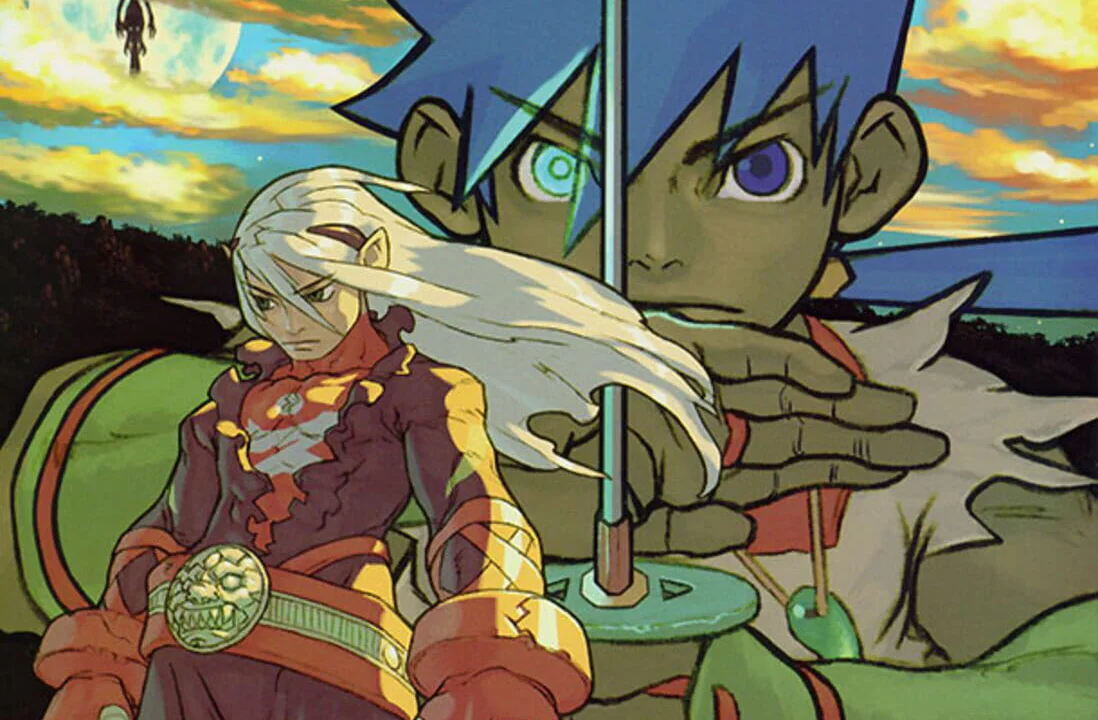
In Riviera: The Promised Land, you'll follow two fierce warriors--each armed with godly weapons--in a mission to defeat demons once and for all. The adventure included lets you experience more than 30 hours of role-playing gameplay, complete with minigames, multiple endings, and secret paths and items. The game's unique item system allows items to function differently depending on which characters equip them.
More about this game · Role-playing · Adventure · Romance
Brandish: The Dark Revenant
From acclaimed Japanese studio Nihon Falcom, the classically-styled dungeon crawler Brandish: The Dark Revenant puts players in the role of swordsman Ares Toraernos as he climbs his way through over 40 sprawling floors of monsters, traps and puzzles in an attempt to escape a long-forgotten underground labyrinth. Along the way he repeatedly encounters his arch-rival, the voluptuous sorceress Dela Delon, who’s just as interested in claiming the bounty on his head as she is in escaping the maze herself. With each floor boasting unrelenting enemies fought in real time, elaborate booby traps, ancient treasures, tricky puzzles and thousand-year-old mysteries to solve, Brandish promises to keep players fighting for survival till the bitter end.
More about this game · Role-playing · Action · Fantasy
The 3rd Birthday
Square Enix's PSP continuation of the Parasite Eve series shifted Aya Brea into a third-person action framework with the Overdive system, where players inhabit the bodies of soldiers on the battlefield to fight across positions. The departure from what made the earlier Parasite Eve games distinctive disappointed fans who wanted a more direct continuation. Taken as a standalone action game the systems work reasonably well, but the story's treatment of the protagonist created controversy that has followed the game since release.
More about this game · Shooter · Role-playing · Adventure · Action · Fantasy · Science fiction · Horror · Survival · Historical
Final Fantasy: 20th Anniversary Edition
Square Enix's PSP remake of the original 1987 Final Fantasy added new dungeons, updated graphics, and rebalanced the job system for modern players unfamiliar with the original's rough edges. The Soul of Chaos and Labyrinth of Time bonus dungeons provide content well past the main game's modest length. As an introduction to the series' origins and a demonstration of how far the franchise had come by 2007, it served its purpose without pretending the original game was something other than a foundational document.
More about this game · Role-playing · Adventure · Action · Fantasy
Grandia
Grandia on PSP as a PS1 classic brought one of the most inventive battle systems of its era to players who had missed it during the original Saturn and PS1 releases. The timeline bar where actions can be canceled or delayed based on positioning and timing creates combat that rewards aggressive management rather than passive turn taking, and hitting an enemy with a cancel attack before their action resolves produces a satisfaction that pure turn-based systems rarely deliver. Justin's adventure tone sits lighter than most RPGs in this list and that lightness is a genuine asset rather than a limitation. Playing it handheld suited the game's pacing well, and the battle system held up better in focused portable sessions than in the longer stretches the home console versions demanded.
More about this game · Role-playing · Fantasy
Valkyria Chronicles 2
Sega moved the series from PS3 to PSP and made structural concessions to fit the handheld format, with smaller chapter-based maps replacing the larger PS3 battlefields. The BLITZ system and the watercolor art direction carry over from the original, and the high school setting is a tonal shift that not everyone found appropriate for a series rooted in wartime drama. The mission variety within the smaller scale and the class advancement system give it more content than the format might suggest.
More about this game · Real Time Strategy · Role-playing · Strategy · Turn-based strategy · Tactical · Action · Fantasy · Historical · Warfare
Disgaea 2: Dark Hero Days
In the peaceful world of Veldime, humans rarely encountered monsters. That was until Overlord Zenon cursed the land and all who reside within. With the curse in place, the humans became monsters and ravaged the world. It is up to Adell, the last remaining human, to oppose Overlord Zenon's tyranny and restore peace and harmony to Veldime. In Disgaea 2, players will take on the role of a young fighter named Adell and travel the Netherworld to defeat the evil overlord Zenon. Battles will take place on a 3D grid-based field. During combat, players will take turns with the enemy to move and attack.
More about this game · Role-playing · Strategy · Turn-based strategy · Action · Fantasy · Comedy
Knights in the Nightmare
Sting's tactical RPG is one of the most mechanically unusual games on this list. The bullet-hell inspired gameplay where players move a cursor to deflect enemy projectiles while issuing commands to knight units creates an experience that requires reading two things simultaneously. The learning curve is steep enough that some players bounced off it completely, but players who invested in understanding the system found something that exists nowhere else in the genre.
More about this game · Role-playing · Strategy
Fate/Extra
Type-Moon's dungeon crawling RPG brought the Fate visual novel's servant system to PSP in a school tournament setting that used the franchise's lore rather than assuming familiarity with it. The rock-paper-scissors inspired combat system where players memorize enemy attack patterns across multiple encounters in the same dungeon floor creates a loop that feels distinctive if repetitive in extended play. The servant routes, particularly Gilgamesh's, reward players who engage with the character writing.
More about this game · Role-playing · Strategy · Turn-based strategy · Adventure · Action · Fantasy
Yu-Gi-Oh! GX Tag Force
Konami's PSP Yu-Gi-Oh entry built around the GX anime characters and the tag team dueling format that let two players combine decks to face opposing pairs. The card pool was substantial for its release date and the relationship building with AI partners added a social element beyond pure card game mechanics. The series continued on PSP across multiple sequels, making this the starting point for a long-running handheld franchise.
More about this game · Role-playing · Turn-based strategy · Card & Board Game · Fantasy
Metal Gear Acid
Konami's launch-window PSP original took Solid Snake into card-based tactical gameplay and created something that satisfied neither Metal Gear fans nor card game fans completely while being interesting to both. The sequel refined what this game introduced, making it more historically significant than it is essential as a standalone game. Worth playing for players interested in how established franchises adapted to the PSP's capabilities in its early months.
More about this game · Role-playing · Turn-based strategy · Tactical · Card & Board Game · Stealth
Jeanne d'Arc
Level-5's tactical RPG built around Joan of Arc's story with fantasy elements added is one of the more underrated PSP originals in the genre. The Transform system that temporarily powers up characters during battle and the historical setting adapted into something more fantastical created a game with a distinct identity. The production values were high for a PSP original and the tactical design is solid throughout.
More about this game · Role-playing · Tactical · Fantasy · Historical
Wild Arms
Wild Arms on PSP as a PS1 classic arrived for many players as a game they'd heard about in lists like this one but never tracked down on original hardware. The Western frontier aesthetic applied to a JRPG structure felt genuinely distinctive in 1996 and still reads as considered rather than arbitrary today. Rudy's ARM weapons, Cecilia's magic, and Jack's puzzle-solving tools give the three characters distinct roles both in combat and in dungeon navigation, which kept the design from feeling uniform across the runtime. The opening anime sequence, one of the first things many PS1 owners saw demonstrating the console's FMV capabilities, arrived intact and still works as an introduction to the world's tone. Short by later JRPG standards and worth playing for players who want something from the era that takes fewer hours to complete than the top of this list demands.
More about this game · Role-playing · Fantasy · Science fiction
Metal Gear Acid 2
Konami's card-based tactical Metal Gear sequel improved on the original's systems considerably and added a stereoscopic 3D mode that required bundled special glasses to experience. The card deck management and turn-based tactical structure created something that felt distinct from both the stealth action series and traditional card games. The Solid Eye accessory and the 3D mode were genuine hardware novelties for 2005 and reflected how seriously Konami took the PSP as a platform.
More about this game · Role-playing · Turn-based strategy · Tactical · Card & Board Game · Stealth
Front Mission 3
Front Mission 3 on PSP as a PS1 classic offered something genuinely rare in the tactics genre: a complete second playthrough that told a meaningfully different story. The choice between Emma and Alisa at the start determines which missions you play, which characters join your force, and which perspective you take on the same geopolitical conflict. Most tactics games offer difficulty options or challenge runs for replay value. Front Mission 3 offered a parallel narrative, and players who found it through PSP and completed both routes found a game that rewarded the investment with a more complete understanding of its world than either route alone provided. The Wanzer customization depth rewards players who engage with the part management fully, and the mech combat holds up well by the standards of the era.
More about this game · Role-playing · Strategy · Turn-based strategy · Science fiction · Warfare
Marvel: Ultimate Alliance 2
Vicarious Visions' PSP version of the action RPG adapted the Civil War storyline and delivered a competent if compressed version of the console experience. The PSP port made meaningful concessions to fit the hardware, and the result is a game better suited to short sessions than the sustained play the console versions supported. For players who wanted Marvel action RPG content on the go, it served its purpose without fully replacing the home console versions.
More about this game · Role-playing · Hack and slash/Beat 'em up · Adventure · Action · Science fiction
Legend of Mana
Legend of Mana's non-linear structure suited portable play better than most players expected. The land placement system that builds the world map by positioning artifacts, and the dozens of short story arcs that unfold across those locations, created a game that worked well in sessions of varying length because there was no single thread demanding continuous progress. PSP players who approached it without expecting a conventional JRPG found the Yoko Shimomura soundtrack and the hand-painted art direction creating an atmosphere that held up better on the smaller screen than the PS1's output suggested it would. The lack of a central narrative remains the defining tension of the experience, but the individual stories and the craft behind them make it worth experiencing for players willing to meet the game on its own terms.
More about this game · Role-playing · Hack and slash/Beat 'em up · Adventure · Action · Fantasy · Sandbox · Open world
Ys: The Oath in Felghana
Nihon Falcom's PSP port of their PC remake of Ys III is one of the finest action RPGs on the platform. The combat system built around dodge timing and elemental magic attacks creates encounters that demand pattern recognition and reward improvement. The boss encounters are the main draw and some of the best designed in the series. The difficulty options make it accessible to players new to Ys without removing the challenge that the series built its reputation on.
More about this game · Role-playing · Adventure · Action · Fantasy
Persona 2: Eternal Punishment
Eternal Punishment on PSP as a PS1 classic gave players who had experienced Innocent Sin through fan translation or the later PSP remake a way to complete the story in a format that made the extended dialogue sequences manageable in shorter sessions. Maya Amano's role as protagonist changes the perspective on events that Innocent Sin established from Tatsuya's viewpoint, and the urban legend conspiracy that drives both games takes on different weight when seen from outside the original group. The Persona fusion system expanded from the first half and the demon negotiation mechanics reflect the era's Atlus design more clearly than later Persona entries, which moved away from both. Worth playing as the second half of a complete story rather than as an introduction to the series.
More about this game · Role-playing · Adventure · Horror
Utawarerumono
Aquaplus' visual novel tactical RPG hybrid arrived on PSP with its full story and strategic battle system intact. The richly detailed fantasy world and the political narrative that builds across a very long runtime reward patient players with one of the more emotionally complete stories in the genre. The combat is accessible by tactics standards and the character writing is strong enough that the visual novel sections between battles feel earned rather than obligatory.
More about this game · Role-playing · Tactical · Visual Novel · Fantasy · Warfare
Corpse Party
Team GrisGris' horror adventure arrived on PSP through XSEED's localization and introduced Western players to a game that had existed in various forms since the early 1990s. The top-down presentation masks genuinely disturbing content, and the branching death routes that require players to find the correct sequence of actions create tension that more technically impressive games rarely achieve. The school setting and the trapped students create a horror premise that commits completely to its implications.
More about this game · Puzzle · Role-playing · Adventure · Indie · Visual Novel · Horror
Ys Seven
Nihon Falcom built their first original Ys game for PSP hardware and introduced a three-character party system to a series that had traditionally followed Adol alone. The fast-paced action combat rewards aggressive play and the boss encounters are designed with the series' characteristic pattern-learning demands. The Altago setting and the five dragon lore give the story more world-building ambition than earlier Ys entries attempted.
More about this game · Role-playing · Adventure · Action · Fantasy · Horror
Half-Minute Hero
Marvelous' time-limited RPG parody is one of the more inventive games on this list. Each scenario gives players thirty seconds to save the world, with a time goddess who can reset the clock for a fee creating a resource management loop around the frantic level grinding. The multiple game modes each parody a different genre, and the writing is sharp enough that the joke sustains across the full runtime. An underappreciated PSP original that deserved more attention than it received.
More about this game · Puzzle · Role-playing · Action · Fantasy
Shin Megami Tensei: Persona
Atlus's PSP remake of the original Persona added a new Snow Queen Quest scenario, updated graphics, and a revised localization that addressed some of the original PS1 version's adaptation choices. The demon negotiation and Persona fusion systems are rougher than later entries in the series, and the first-person dungeon crawling reflects the game's 1996 origins. Worth playing for fans of the series who want to understand where it started, with the caveat that later entries refined everything it introduced.
More about this game · Role-playing · Science fiction · Mystery
Parasite Eve II
Square's survival horror follow-up arrived on PSP as a PS1 classic with its third-person perspective and resource management intact. The shift away from the first game's RPG combat toward something closer to Resident Evil divided fans expecting a direct continuation. Aya Brea returns and the Arizona desert setting is distinctive for a JRPG of this era. Worth playing as a companion to the original rather than a replacement.
More about this game · Role-playing · Action · Science fiction · Horror · Survival
Dissidia Final Fantasy
Square Enix's fighting RPG built around Final Fantasy heroes and villains created something that sat comfortably in neither genre and worked well in both. Cosmos and Chaos presiding over a war fought by iconic characters from across the series gave it a crossover appeal that the spinoff format justified. The Bravery system, where dealing damage builds a resource that converts into HP damage, created a loop with more strategic depth than the concept suggested. A PSP original that could only have existed on this platform.
More about this game · Fighting · Role-playing · Hack and slash/Beat 'em up · Adventure · Action · Fantasy
Dissidia 012 Final Fantasy
Square Enix's expanded follow-up added Lightning, Kain, Tifa, Laguna, and Prishe to the roster and included the full content of the original Dissidia alongside new story content set before the events of the first game. The refined Bravery combat system and the additional characters made this the more complete version of the concept for players who came to it fresh. For players who had already spent hundreds of hours with the original, the additions gave them reasons to return.
More about this game · Fighting · Role-playing · Adventure · Action · Fantasy
The Legend of Heroes: Trails in the Sky the 3rd
XSEED's third Trails in the Sky localization shifted the protagonist to Kevin Graham and structured the game around a series of character vignettes that filled in backstory for the cast across the first two games. Less a traditional JRPG and more an extended epilogue with a complete story of its own, it rewards players who finished SC most fully but functions as a worthwhile game for players who want more time in Liberl. The final chapters are among the best writing in the series.
More about this game · Role-playing · Turn-based strategy · Fantasy · Science fiction
The Legend of Heroes: Trails in the Sky SC
XSEED's second Trails in the Sky localization pays off everything the first game set up and then expands the world considerably. The Bracers' guild, the political situation in Liberl, and the relationship between Estelle and Joshua all reach conclusions that required the patience of two full games to earn. The combat system refined by SC remains one of the better turn-based implementations in the genre, and the world density rewards players who read every NPC dialogue between chapters.
More about this game · Role-playing · Turn-based strategy · Fantasy · Science fiction
Harvest Moon: Back to Nature
Harvest Moon: Back to Nature suited handheld play better than almost any other game in this list. The seasonal calendar structure, where each in-game day represents a short real-world session of planting, watering, and relationship building, mapped naturally onto PSP play sessions in ways that long home console stretches never quite matched. The three-year evaluation structure with real stakes for neglected farm management gave the loop purpose that later entries softened into something more forgiving. Playing it on PSP meant the game traveled with you, which suited a game about daily routines and the passage of seasons in ways that sitting in front of a television never quite captured.
More about this game · Role-playing · Simulator · Business
Chrono Trigger
The PS1 port of Chrono Trigger added load times that interrupted the SNES original's pacing, and those load times were present in the PSP classic version as well. The game underneath that friction remains one of the finest JRPGs ever made, and for players who found it through PSP rather than the DS version that addressed the load time issue, the small pauses become part of the texture of the experience rather than a dealbreaker. The dual and triple tech system, the multiple endings, and the time travel used as structural device rather than a gimmick hold up regardless of which version you play. The DS port is the better technical version, but the PSP classic introduced it to players who went looking for it specifically because of its reputation, and few games deliver as completely on that kind of advance billing.
More about this game · Role-playing · Action · Fantasy · Science fiction
Monster Hunter Freedom Unite
Capcom's PSP Monster Hunter entry is the platform's definitive cooperative experience. The G-rank hunts that extend well past the main game's content, the weapon variety across fourteen categories, and the gathering hall multiplayer that worked through local wireless created a game that defined how Japanese players used the PSP in public spaces. The learning curve is genuinely steep for new players, but the investment pays back in hundreds of hours of viable content.
More about this game · Role-playing · Action · Sandbox
Vagrant Story
Squaresoft's mechanically dense action RPG arrived on PSP as a PS1 classic and remained as demanding as ever. The weapon affinity system, the risk mechanic that increases damage both dealt and received, and the workshop crafting create interlocking systems that reward players willing to read every menu. Ashley Riot and the city of Leá Monde give it an atmosphere unlike anything else in the PS1 library, and the PSP's screen suited the Gothic art direction well.
More about this game · Role-playing · Adventure · Action · Fantasy
Breath of Fire IV
Capcom's fourth entry arrived on PSP as a PS1 classic with its hand-drawn sprite work and 3D environments looking surprisingly good on the handheld screen. Fou-lu's parallel storyline and the darker ending than most Breath of Fire games give it a narrative ambition the series hadn't reached before. The dragon transformation system is the series' most refined version and the combat holds up well.
More about this game · Role-playing · Turn-based strategy · Adventure · Action · Fantasy · Science fiction
The Legend of Dragoon
Sony Japan's lengthy RPG arrived on PSP as a PS1 classic with the Addition system, where button prompts during physical attacks determine damage output, fully intact. The system's demands across a 60-hour runtime remain divisive, but players who engage with it find a combat loop that most JRPGs from this era didn't attempt. The production values were impressive for a first-party PS1 RPG and the world design holds up better than the resolution suggests.
More about this game · Role-playing · Action · Fantasy · Historical · Drama
Parasite Eve
Parasite Eve on PSP arrived as a PS1 classic in a library where most RPGs ran considerably longer, and its compact runtime made it an appealing option for players who wanted a complete experience in the space of a long weekend rather than a month. The active time battle system with movement and positioning adds spatial awareness that most JRPGs of 1998 avoided, and the mitochondrial horror premise commits to its scientific framing in ways that give it a tone unlike anything else on the platform. The Carnegie Hall opening, where Aya watches a performance turn into something horrific while her police instincts kick in before she fully understands what she's seeing, remains one of the better scene-setting moments in the genre. The game's short length was a criticism at launch and has become an asset as the years passed.
More about this game · Role-playing · Adventure · Action · Fantasy · Science fiction · Horror · Survival · Historical · Stealth
Suikoden
Suikoden on PSP functioned primarily as an introduction to a series that most players encountered through the sequel first. The digital availability made the recommended play order, original before sequel, actually achievable without hunting down increasingly expensive physical copies, and players who followed that path found the first game's relative simplicity made the sequel's refinements land with more impact. The 108 Stars of Destiny system in its original form is less demanding than the sequel's version, the political conflict moves with purpose, and the castle headquarters gives recruitment stakes that a pure collectible system wouldn't have. Short by the standards of the era and straightforward by the standards of the genre, it works best as a foundation for what followed rather than a destination in itself.
More about this game · Role-playing · Turn-based strategy · Adventure · Fantasy
Final Fantasy Tactics: The War of the Lions
Square Enix's PSP enhanced version of Final Fantasy Tactics added two new playable characters, new cutscenes with updated artwork, and a significantly improved localization that replaced the original's rough translation with something more nuanced. Balthier and Luso's additions fit naturally into the existing structure, and the new translation makes the political story considerably easier to follow. The touchscreen control option added in later ports wasn't present here, but the PSP button layout suited the tactical grid well.
More about this game · Role-playing · Turn-based strategy · Tactical · Adventure · Fantasy · Historical · Warfare
The Legend of Heroes: Trails in the Sky
XSEED's localization of Nihon Falcom's RPG gave English-speaking players access to one of the most carefully constructed worlds in the genre. Liberl Kingdom's political structure, the bracers' guild system, and the relationship between Estelle and Joshua develop across a runtime that prioritizes world-building over spectacle. The first game's ending is genuinely surprising for how much it recontextualizes what came before, and the second chapter is necessary to see that setup pay off.
More about this game · Role-playing · Fantasy · Science fiction
Chrono Cross
The PSP screen did something interesting for Chrono Cross that larger modern displays don't. The game's hand-painted backgrounds and Yasunori Mitsuda's soundtrack were designed for the PS1's output quality, and the smaller screen preserved the art direction's intended texture better than upscaled versions on HD displays. The parallel world structure, the cast of over forty recruitable characters, and the color element combat system arrived intact as a PS1 classic download. Players who came to it expecting a direct continuation of its predecessor found something that deliberately complicated that expectation, and players who came to it fresh through PSP found a JRPG with one of the most distinctive audiovisual identities in the genre. The story requires patience with its thematic ambitions to resolve satisfyingly, but the payoff for that patience is a game that stays in the memory in ways that more straightforward JRPGs from the same era don't.
More about this game · Role-playing · Turn-based strategy · Adventure · Fantasy · Open world
Crisis Core: Final Fantasy VII
Square Enix's PSP original told Zack Fair's story, filling in the decade before Final Fantasy VII began and giving players the context for Cloud's fractured identity that the original game only partially supplied. The Digital Mind Wave system, which triggers random stat boosts and Limit Breaks through a slot machine mechanic, is either the game's most charming quirk or its most frustrating design depending on how you feel about randomized combat bonuses. The story earns its ending in a way that only works because players already know what happens after.
The 2022 Reunion remake made the game accessible to players without PSP hardware, but the original version has its own texture that the remaster's updated presentation changes in noticeable ways. For players who experienced Crisis Core on PSP during its original release, the ending hit differently knowing Zack's fate from Final Fantasy VII and seeing it arrive anyway. A strong original PSP RPG that justified carrying the hardware specifically to play it.
More about this game · Role-playing · Adventure · Action · Science fiction
Xenogears
Xenogears on PSP was many players' first encounter with a game they had read about for years without having accessible hardware to play it on. The PS1 classic download made it available without the original disc, and players who came to it through PSP brought expectations shaped by years of reputation building that the game only partially meets. The first disc delivers on the reputation. The Deathblow combo system for human combat and the fuel-based Gear combat create mechanical layers with more depth than most JRPGs of the era attempted, and the philosophical ambition of the writing, however uneven, was unlike anything else available on the platform.
The second disc's budget collapse is no less real on PSP than it was on PS1. Extended dialogue sequences replace the dungeon exploration that made the first disc compelling, and the story concludes through walls of text rather than the interactive narrative the opening hours promised. Playing it handheld made the dialogue-heavy second disc slightly more manageable in the sense that reading large amounts of text felt more natural in a portable context, but it didn't change what the disc was. A game worth playing specifically because of the gap between its ambition and its execution, which teaches something about what was possible and what was attempted in 1998.
More about this game · Role-playing · Fantasy · Science fiction
Final Fantasy Tactics
The original Final Fantasy Tactics PS1 classic was available on PSP alongside the enhanced War of the Lions version, creating a choice most players resolved by going straight to the remake. The original's rough translation, where lines like "I apologize for my poor skill" became infamous through repetition, gave the story less clarity than the political narrative deserved. The systems underneath that translation are identical across both versions: the Job Class combination space, the tactical grid encounters, and Ramza's story about class and religious corruption that was more ambitious than almost anything else on the platform. The PSP format suited the game's structure well because individual battles could be completed in focused sessions, making it easier to engage with a game this mechanically dense without needing long uninterrupted stretches of home console time.
More about this game · Role-playing · Turn-based strategy · Tactical · Fantasy · Thriller · Historical
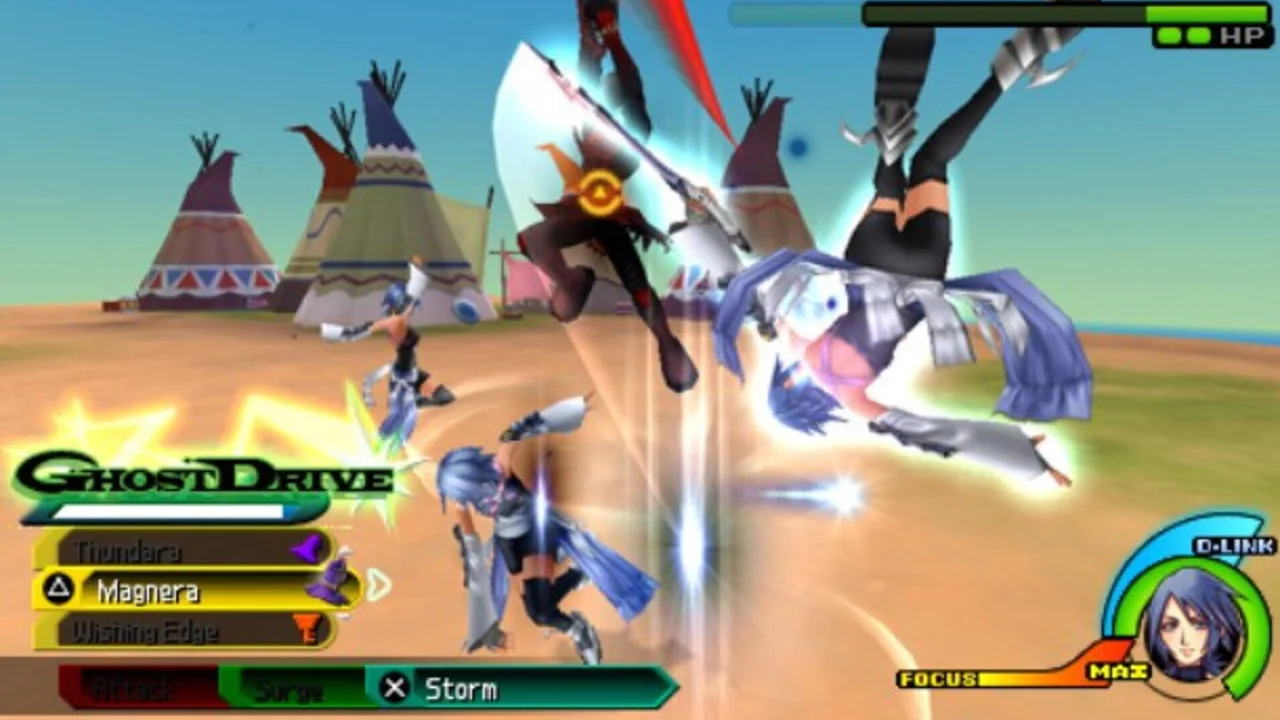
Kingdom Hearts Birth by Sleep
Square Enix built an original PSP entry in the Kingdom Hearts series that told the story preceding the original game through three separate campaigns following Terra, Aqua, and Ventus. Each character has a different combat style and a different perspective on the same events, and playing all three in sequence creates a full picture that individual playthroughs only partially reveal. Aqua's campaign is the strongest of the three and ends with one of the better conclusions in the series.
The Command Deck system replaced the action RPG structure with customizable ability loadouts that created different mechanical identities across the three characters. The PSP hardware handled the game surprisingly well, and the world variety, drawing from Disney properties alongside original Keyblade lore locations, kept the game visually distinct across its runtime. A PSP original that justified the platform's existence as a serious RPG hardware.
More about this game · Role-playing · Action · Fantasy
Suikoden II
The PSP changed the accessibility equation for Suikoden II in a way that almost nothing else could have. Physical PS1 copies had been selling for hundreds of dollars for years by the time the digital version arrived on PSP, making this one of the first times most Western players could experience the game without either spending serious money or finding other means. The 108 Stars of Destiny recruitment system works the same way it always did, the castle headquarters grows with your army, and the political story about war and betrayal between Riou and Jowy reaches the same conclusions. But experiencing it for the first time in portable form, often by players who had heard about it for years without being able to play it, gave the game a specific reputation among PSP owners that it had earned but never fully received on PS1.
The story's second half earns its reputation. The political consequences, the personal betrayals, and the way the narrative refuses easy resolutions created something that players who found it through PSP consistently describe as among the best JRPGs they've played regardless of era. The recruitment system's demands, where missing key characters locks out the true ending, are as unforgiving as ever, but guides existed by the time PSP players found it, which softened that particular edge somewhat.
More about this game · Role-playing · Strategy · Turn-based strategy · Fantasy · Historical
Persona 3 Portable
Atlus rebuilt their PS2 RPG for the PSP and added a female protagonist route that changes the social link structure and several story scenes in ways that make the second playthrough feel genuinely different from the first. The SEES dormitory, the Tartarus dungeon, and the Social Link system that builds relationships between full moon operations are all present, and the streamlined presentation removes the animated cutscenes in exchange for a visual novel format that actually suits the handheld better than expected.
The female protagonist route added Shinjiro's social link, which the original PS2 version never had, and completing it adds emotional weight to events the male route leaves partially unexplored. The inability to directly control party members is the main caveat carried over from the original, though the PSP version gives more tactical options than the base PS2 release. For players who haven't experienced Persona 3, this version remains the most complete way to see both sides of the story.
More about this game · Point-and-click · Role-playing · Adventure · Visual Novel · Action · Horror
Final Fantasy VIII
Final Fantasy VIII is the game on this list most likely to play differently depending on when you first encountered it. Players who came to it on PSP after spending time with the rest of the series often found the Junction system less opaque than players who approached it cold in 1999, because the context of knowing what Square was attempting made the mechanics easier to engage with charitably. Attaching magic stocks to stats and drawing spells from enemies creates a combat loop that punishes players who use their magic freely, which the game never explains clearly enough.
Triple Triad is the honest reason many players spent more hours with this game than the main story warranted. The card game embedded in the world has more internal logic than the Junction system and rewards the same kind of obsessive engagement. The PSP format suited the card game particularly well, since collecting and refining cards across the game world was easier to manage in focused handheld sessions. The story's emotional ambition doesn't always land cleanly, but the production values and the Balamb Garden setting remain impressive enough that the game's devoted fanbase has always had something real to defend.
More about this game · Role-playing · Adventure · Card & Board Game · Fantasy · Science fiction · Open world
Final Fantasy IX
Final Fantasy IX arrived on PSP as a PS1 classic at a point when the conversation around it had shifted considerably from its original release. In 2000 it was seen by some as a step backward after two games pushing the series toward contemporary aesthetics. By the time PSP players were discovering it, the critical reassessment had begun, and players coming to it fresh through the handheld found a game whose warmth and theatrical ambition felt more distinctive rather than less. The equipment-based ability learning system rewards completionist play without demanding grinding, and Vivi's arc holds up as some of the finest character writing the series produced on PS1 hardware.
The back half's pacing issues are real and unavoidable. Disc 4 rushes toward its conclusion in ways that feel like the development timeline caught up with the ambition. Playing it in portable sessions actually helped with this, since the slower middle sections of the game were easier to push through in shorter bursts than in extended home console play. For players finding it for the first time through PSP, the recommendation is the same as it's always been: the first three discs are worth whatever the fourth one costs you.
More about this game · Role-playing · Adventure · Fantasy · Drama · Open world
Castlevania: Symphony of the Night
The PSP version arrived bundled inside the Dracula X Chronicles compilation alongside a remake of Rondo of Blood, making it part of a package that gave the game new context. The revised translation replaced the original localization's famously stilted English dialogue, including the iconic "What is a man?" exchange, with something more straightforward that divided players along predictable lines. New voice acting accompanied the translation changes, which added another layer of debate for players who had memorized the original cast's delivery over years of repeat playthroughs.
What the PSP version preserved completely was the castle itself. The interconnected map, the inverted second half, the RPG equipment system layered over the action platforming, and the Michiru Yamane soundtrack that defined atmospheric video game music for an entire generation. The smaller screen suited the game's dense sprite work better than many expected, and having it portable made revisiting a game this large considerably easier than setting up PS1 hardware. The debate about which localization is definitive is worth having, but it shouldn't distract from the fact that either version of this game is worth playing.
More about this game · Platform · Role-playing · Adventure · Action · Horror · Open world
Final Fantasy VII
Playing Final Fantasy VII on a PSP with headphones is a different experience from the television and couch version most players encountered first. The Nobuo Uematsu soundtrack benefits from the intimacy of the format, and the Materia system's build customization, attaching magic and abilities to equipment slots rather than characters, is easier to manage in the focused context of handheld play. The game arrived on PSP as a PS1 classic download and introduced itself to an entirely new generation who experienced Midgar for the first time on a small screen in a car, on a plane, or in a bedroom at two in the morning.
The story hasn't aged in ways that matter. Cloud's fractured identity, Aerith's warmth, Barret's grief wrapped in bravado: these are characters written with enough specificity that they hold up long past the pre-rendered backgrounds and polygon counts. For players who came to Final Fantasy VII through this platform rather than the original PS1 hardware, this is the version that carries the strongest memory, and that's worth acknowledging separately from whatever the game means to players who were there in 1997.
More about this game · Role-playing · Adventure · Fantasy · Science fiction
Wrapping Up
The PSP's RPG library holds a specific place in gaming history because it existed at the intersection of two things happening simultaneously. Original games built for the hardware were pushing what handheld RPGs could attempt, while a catalog of PS1 classics was making a remarkable generation of games newly accessible to players who had missed them. That combination produced something unusual for a handheld platform.
What's interesting looking back at every great RPG the PSP produced is how many of them were genuinely difficult to play any other way at the time. Trails in the Sky in English existed on PSP or not at all for years. Crisis Core was a PSP original for over a decade before the Reunion remake arrived. Monster Hunter's social dimension only existed the way it did because of how Japanese players used the hardware in public spaces.
We this list updated as community ratings reflect how these games hold up over time. The PSP is no longer in production but the library it built is worth returning to, and the games at the top of this list demonstrate that as clearly as any platform's greatest hits ever have.
Latest Updates
We track every change to our lists so they stay fresh. Below is a log of the last month of updates to this list, most recent first.