Games Released in November 1985

37 new games released in November 1985, with Family Computer being the most active platform. November 1 was the busiest day, with 16 new releases.

Top Platform

Family Computer

New Releases

37

Busiest Day

November 1

Ultima IV: Quest of the Avatar

What was the most popular game of November 1985?

Ultima IV: Quest of the Avatar

Following the defeat of the evil triad in the previous three Ultima games, the world of Sosaria changed beyond recognition: continents rose and sank, and new cities were built, heralding the advent of a different civilization. Unified by the reign of the benevolent monarch Lord British, the new world was renamed Britannia. Lord British wished to base people's well-being on the ethical principles of Truth, Love, and Courage, proclaiming the Eight Virtues (Honesty, Compassion, Valor, Justice, Sacrifice, Honor, Spirituality, and Humility) as the ideal everyone should strive for. The person who could accomplish full understanding and realization of these virtues would serve as a spiritual leader and a moral example for the inhabitants of Britannia; he alone would be able to obtain holy artifacts, descend into the Stygian Abyss, and access the Codex of Ultimate Wisdom. This person is the Avatar. The fourth game in the Ultima series features an improved game engine, with color graphics and enhanced character interaction: the player can have conversations with non-playable characters by typing names of various topics. However, the main difference between Ultima IV and its predecessors in the series (as well as other role-playing games) lies in the game's objectives and the ways to fulfill them. Instead of building up a character by any means possible in order to face a villain in the end of the game, in Ultima IV the player is trying to become the Avatar, a role model for people. This means upholding the Eight Virtues, basically trying to become a better person. Making morally conscious decisions and helping other people is not done expecting a material reward, but because it is the actual goal of the game and the main focus of its gameplay. The game frowns on behavior typical of most other RPGs, such as backstabbing fleeing enemies or picking up everything that isn't nailed down even if it does not belong to the protagonist. This different approach established the game's reputation as the first "true" Ultima, influencing the design philosophy of later installments and the overall spirit of the series. Character creation is done by choosing responses to morally ambiguous questions. Each of the Eight Virtues corresponds to a character class; by determining the player's personal priorities in the virtues, the game assigns a class and a starting location for the Avatar. After emerging in Britannia, the player is free to explore it in various ways (on foot, moongate teleportation, on horseback, by ship, etc.). Certain items must be collected in any order to enter the Stygian Abyss and complete the game. The Avatar also has to reach the highest level in all virtues. This is achieved by various means: donating blood increases Sacrifice, not fleeing from combat increases Valor, etc. The process, however, is not irreversible: should the Avatar overpay a blind seller, he gains Compassion points; should he, on the other hand, cheat the seller by underpaying, his level in several virtues would decrease. These unorthodox features of the game co-exist with plenty of traditional RPG elements, such as dungeons to explore and hostile monsters to kill. Enemies are encountered on the world map as well as in dungeons; combat takes place on separate top-down screens, allowing player-controlled and enemy parties freely move on them. Characters accumulate experience points and level up, gaining higher amount of hit points and access to stronger magic spells. Like in the previous installments of the series, world map, town exploration and combat are presented from a top-down view, while the dungeons are pseudo-3D and are explored from first-person perspective. Ultima IV also introduces several new gameplay features to the series and role-playing games in general. A number of initially non-playable characters living in various areas of the game world are able to to join the party and fight alongside the hero, replacing traditional player-generated characters or mercenaries and adventurers available only in special locations. Additional new elements include buying and combining reagents in order to cast spells, puzzle rooms in dungeons, and others.

Which days had the most releases?

November 1 saw the most activity with 16 releases.

SunMonTueWedThuFriSat

Fri, Nov 1

16 releases

Sat, Nov 2

No releases

Sun, Nov 3

No releases

Mon, Nov 4

No releases

Tue, Nov 5

2 releases

Wed, Nov 6

No releases

Thu, Nov 7

1 release

Fri, Nov 8

1 release

Sat, Nov 9

No releases

Sun, Nov 10

No releases

Mon, Nov 11

No releases

Tue, Nov 12

2 releases

Wed, Nov 13

No releases

Thu, Nov 14

2 releases

Fri, Nov 15

2 releases

Sat, Nov 16

No releases

Sun, Nov 17

No releases

Mon, Nov 18

No releases

Tue, Nov 19

1 release

Wed, Nov 20

1 release

Thu, Nov 21

3 releases

Fri, Nov 22

No releases

Sat, Nov 23

1 release

Sun, Nov 24

No releases

Mon, Nov 25

1 release

Tue, Nov 26

No releases

Wed, Nov 27

1 release

Thu, Nov 28

2 releases

Fri, Nov 29

2 releases

Sat, Nov 30

No releases

How did each week compare?

The first week of November was the busiest with 19 releases.

Week 1 (November 1–7)

19 releases
Ultima IV: Quest of the Avatar

Most popular release in Week 1

Ultima IV: Quest of the Avatar

Following the defeat of the evil triad in the previous three Ultima games, the world of Sosaria changed beyond recognition: continents rose and sank, and new cities were built, heralding the advent of a different civilization. Unified by the reign of the benevolent monarch Lord British, the new world was renamed Britannia. Lord British wished to base people's well-being on the ethical principles of Truth, Love, and Courage, proclaiming the Eight Virtues (Honesty, Compassion, Valor, Justice, Sacrifice, Honor, Spirituality, and Humility) as the ideal everyone should strive for. The person who could accomplish full understanding and realization of these virtues would serve as a spiritual leader and a moral example for the inhabitants of Britannia; he alone would be able to obtain holy artifacts, descend into the Stygian Abyss, and access the Codex of Ultimate Wisdom. This person is the Avatar. The fourth game in the Ultima series features an improved game engine, with color graphics and enhanced character interaction: the player can have conversations with non-playable characters by typing names of various topics. However, the main difference between Ultima IV and its predecessors in the series (as well as other role-playing games) lies in the game's objectives and the ways to fulfill them. Instead of building up a character by any means possible in order to face a villain in the end of the game, in Ultima IV the player is trying to become the Avatar, a role model for people. This means upholding the Eight Virtues, basically trying to become a better person. Making morally conscious decisions and helping other people is not done expecting a material reward, but because it is the actual goal of the game and the main focus of its gameplay. The game frowns on behavior typical of most other RPGs, such as backstabbing fleeing enemies or picking up everything that isn't nailed down even if it does not belong to the protagonist. This different approach established the game's reputation as the first "true" Ultima, influencing the design philosophy of later installments and the overall spirit of the series. Character creation is done by choosing responses to morally ambiguous questions. Each of the Eight Virtues corresponds to a character class; by determining the player's personal priorities in the virtues, the game assigns a class and a starting location for the Avatar. After emerging in Britannia, the player is free to explore it in various ways (on foot, moongate teleportation, on horseback, by ship, etc.). Certain items must be collected in any order to enter the Stygian Abyss and complete the game. The Avatar also has to reach the highest level in all virtues. This is achieved by various means: donating blood increases Sacrifice, not fleeing from combat increases Valor, etc. The process, however, is not irreversible: should the Avatar overpay a blind seller, he gains Compassion points; should he, on the other hand, cheat the seller by underpaying, his level in several virtues would decrease. These unorthodox features of the game co-exist with plenty of traditional RPG elements, such as dungeons to explore and hostile monsters to kill. Enemies are encountered on the world map as well as in dungeons; combat takes place on separate top-down screens, allowing player-controlled and enemy parties freely move on them. Characters accumulate experience points and level up, gaining higher amount of hit points and access to stronger magic spells. Like in the previous installments of the series, world map, town exploration and combat are presented from a top-down view, while the dungeons are pseudo-3D and are explored from first-person perspective. Ultima IV also introduces several new gameplay features to the series and role-playing games in general. A number of initially non-playable characters living in various areas of the game world are able to to join the party and fight alongside the hero, replacing traditional player-generated characters or mercenaries and adventurers available only in special locations. Additional new elements include buying and combining reagents in order to cast spells, puzzle rooms in dungeons, and others.

Week 3 (November 15–21)

7 releases
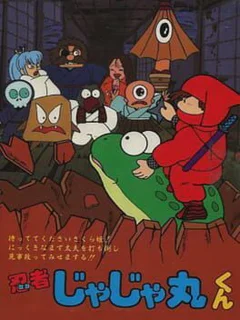
Ninja JaJaMaru-kun

Most popular release in Week 3

Ninja JaJaMaru-kun

The game stars the brother of Ninja-kun (from Ninja-Kid). Princess Sakura has been kidnapped by Damazu-Dayuu, and because Ninja-Kun is away on a journey, the task falls to young JaJaMaru-kun. In the game, the player starts with three lives and can only run, jump and throw shurikens. The game is divided into stages, each with four floors and eight enemies. Sakura-Hime and Damazu are placed, unreachable, at the top of the screen. Enemies use various projectiles, one of which will cause the player to lose a life. If JaJaMaru-kun lands on top of an enemy, it will simply be temporarily stunned and vice versa. Once an enemy is defeated and offscreen, a spirit will appear and ascend to the top of the screen. It can be collected before it has disappeared to receive points, which vary depending on the enemy. Sakura will sometimes drop petals that the player can collect, and Damazu will sometimes run around, dropping bombs. To advance to the next stage, the player must defeat all eight enemies by using shurikens. Some bricks yield items. They include: A cart that temporarily makes JaJaMaru-kun invincible and faster. Projectiles and enemies will also be destroyed if touched. A bottled substance that makes JaJaMaru temporarily invincible and able to walk through enemies. A red ball that increases speed. Bombs (which must be avoided). Coins that yield various amounts of points. An extra life. If all three types of power-ups are collected, Gamapa-kun, a giant frog, will be summoned, which is completely invincible and able to eat all enemies. If three of Sakura's petals are collected, the player will go to a bonus stage in which JaJaMaru-kun is on the bottom and Damazu at the top. Damazu drops bombs, and the player throws shurikens upward. If the player manages to hit Damazu, bonus points are awarded. If the JaJaMaru-kun is hit by a bomb, he goes on to the next stage. Initially the game was released exclusively in Japan, but it came to the rest of the world for the first time in 2007 as part of the Wii virtual console, as well as for Nintendo Switch Online in 2021.

Which platforms saw the most releases?

Family Computer received 8 new titles in November 1985. The runner up was Commodore C64/128/MAX with 6 new titles.

Family Computer8 releases
Commodore C64/128/MAX6 releases
Arcade4 releases
Apple II4 releases
ZX Spectrum4 releases
PC-9800 Series3 releases
PC-8800 Series3 releases
MSX2 releases
Amstrad CPC2 releases
Sharp X11 release

What genres were most popular?

Adventure was the dominant genre in November 1985 with 10 titles. Arcade followed closely with 8.

Adventure10
Arcade8
Shooter7
Platform7
Puzzle6
Role-playing6
Sport3
Point-and-click2
Strategy2
Tactical2