Games Released in September 1990

74 new games released in September 1990, with Game Boy being the most active platform. September 28 was the busiest day, with 14 new releases.
Which days had the most releases?

September 28 saw the most activity with 14 releases.
How did each week compare?

The first week of September was the busiest with 22 releases.
Week 1 (September 1–7)

22 releases
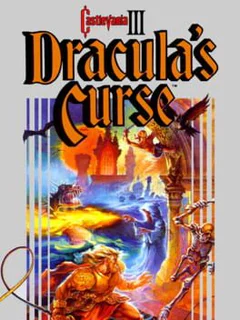
Castlevania III: Dracula's Curse

Most popular release in Week 1

Castlevania III: Dracula's Curse

Led by the immortal Count Dracula, the greatest army of evil ever assembled is poised to bury mankind in a Tomb of Terror. Destroying this legion of Swamp Dragons, Slasher Skeletons and Forces of the Undead will be the supreme challenge for the mightiest of warriors. Your place in history is 100 years before Simon Belmont's birth. Dracula is young at heart, and it will take more than a stake to penetrate his evil. Luckily, you command the role of Trevor - Simon's forefather and the origin of the Belmont Warlord Chromosomes. Trevor has a power never before seen by human eyes - the power to transform into three different spirits: Grant DaNasty, the ferocious Ghost Pirate. Sypha, the Mystic Warlord. And Alucard, Dracula's forgotten son. You must perfectly time Trevor's body transformations to match up his different fighting spirits against Ultimate Evils. Trevor also has the strength and wisdom to command the Battle Axe, Invisibility Potion and Mystic Whip. But the most important weapon Trevor has is your cunning to choose the correct Paths of Fate and your bravery to lead him past 17 possible levels of never-ending doom, including the Haunted Ship of Fools, the Sunken City of Poltergeists, the Clock Tower of Untimely Death and Curse Castle. Never before have so many dangers confronted you at one time. And if by some miracle you triumph, you'll no longer be a mere mortal. You'll be a legend who'll live forever!

Week 3 (September 15–21)

15 releases
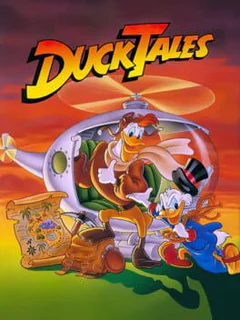
Disney's DuckTales

Most popular release in Week 3

Disney's DuckTales

DuckTales is a platform game developed and published by Capcom and based on the Disney animated TV series of the same name. It was first released in North America for the Nintendo Entertainment System in 1989 and was later ported to the Game Boy in 1990. The story involves Scrooge McDuck traveling around the globe collecting treasure and outwitting his rival Flintheart Glomgold to become the world's richest duck. Produced by key personnel from the Mega Man series, DuckTales would go on to sell over a million copies worldwide on each system, becoming Capcom's best-selling title for both platforms. The game was praised for its tight control, unique and non-linear gameplay and bright presentation, and is often regarded as one of the best titles for the NES, appearing on numerous "Best of" lists.

Week 5 (September 29–30)

3 releases
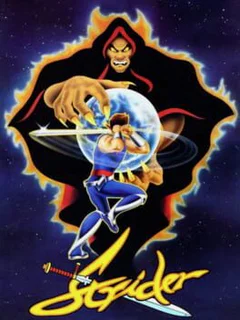
Strider

Most popular release in Week 5

Strider

The controls of Strider consist of an eight-way joystick and two action buttons for attacking and jumping. The player controls Hiryu himself, whose main weapon is a tonfa-like plasma sword known as "Cypher". He can perform numerous acrobatic feats depending on the joystick/button combination used. Pressing the jump button while Hiryu is standing still will cause him to do a regular vertical jump, while pressing the jump button while pushing the joystick left or right will enable him to do a cartwheel jump. Hiryu can also slide under or through certain obstacles and enemies by first crouching down and then pressing the jump button. As well as his sliding move, both jumps can also be used to destroy weaker opponents. Hiryu is able to latch onto certain platforms, and climb across walls and ceilings using a metallic hook. While running down a sloped surface, Hiryu can gain enough momentum to allow him to do a longer cartwheel jump than usual. Numerous power-ups can be obtained from item boxes carried by certain enemies. These includes an extension to Hiryu's attack range that lasts for one hundred slashes, two types of health aids (represented by the kanji used to write Hiryu's name: 飛 and 飛竜), a max health extension (represented by the kanji 竜, the second character in Hiryu's name), an extra life, and a power-up that not only makes Hiryu invulnerable to attack but also increases his own attack abilities via shadow images of himself for 15 seconds.[3] Hiryu can also summon robotic companions known collectively as "options" that help him fight enemies. These consist of up to two mushroom-like droids, a saber-toothed tiger and a hawk, known individually as Option A, B and C respectively. The game has five stages: the Kazakh Soviet Socialist Republic (called "St. Petersburg" during the arcade game's attract sequence), the Siberian Wilderness, the Aerial Battleship Balrog (געלראב), the Amazonian Jungle, and the Grandmaster's lair itself, the Third Moon. Each of the stages is divided into a number of smaller sections, each with their own time limit and checkpoint location. The player has a three-point health gauge (which can be increased to five points with the health extensions. Hiryu will lose a life when either his health gauge is fully depleted, by moving him off the screen entirely (like falling into a bottomless pit) or when the game's timer reaches zero. It's Game Over when all of Hiryu's lives are lost, but the player can be given the opportunity to continue.

Which platforms saw the most releases?

Game Boy received 13 new titles in September 1990. The runner up was TurboGrafx-16/PC Engine with 12 new titles.

Game Boy13 releases
TurboGrafx-16/PC Engine12 releases
Family Computer12 releases
Nintendo Entertainment System9 releases
Sega Mega Drive/Genesis8 releases
Sharp X680004 releases
Turbografx-16/PC Engine CD3 releases
ZX Spectrum2 releases
PC-8800 Series2 releases
Arcade2 releases

What genres were most popular?

Platform was the dominant genre in September 1990 with 16 titles. Shooter followed closely with 12.

Platform16
Shooter12
Puzzle12
Strategy10
Arcade10
Adventure9
Sport7
Role-playing6
Simulator6
Hack and slash5