Games Released in April 1988

34 new games released in April 1988, with Family Computer Disk System being the most active platform. April 1 was the busiest day, with 7 new releases.

Which days had the most releases?

April 1 saw the most activity with 7 releases.

SunMonTueWedThuFriSat

How did each week compare?

The first week of April was the busiest with 10 releases.
Week 2 (April 8–14)

5 releases
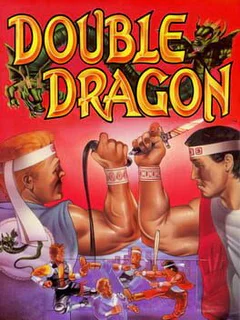
Double Dragon

Most popular release in Week 2

Double Dragon

The NES version of Double Dragon takes a wide range of liberties with the interpretation. The entire graphical style is more in line with Technōs’ Kunio-kun series, with characters that go for exaggerated expression rather than gritty realism. The biggest change, however, was reserved for the moveset. You start the game with only the punch, kick and headbutt available – all the other moves are obtained via an RPG-lite style experience system. Hitting enemies is now rewarded with a certain amount of experience points depending on the attack, and each time the counter goes above 999, you’re awarded an additional heart, which extends the range of possible actions. Two hearts add the uppercut and roundhouse kick combo finishers, and with three Billy can perform the jump kick maneuver. The fourth heart unlocks access to grappling moves.

Week 4 (April 22–28)

9 releases
Ys II: Ancient Ys Vanished - The Final Chapter

Most popular release in Week 4

Ys II: Ancient Ys Vanished - The Final Chapter

A bright light shot up from Darm Tower in the end of the first Ys, and Adol Christin is awakened by a young girl who finds him lying on the ground. She introduces herself as Lilia and tells Adol he is in the land of Ys. Finally he was able to establish a connection between his world and this mysterious land! But finding the gateway to Ys is not enough: Adol must stop an evil entity that his archenemy Dark Fact served. And his foes already know where he is. Ys II: Ancient Ys Vanished - The Final Chapter is a direct sequel to Ys I: Ancient Ys Vanished - Omen. The game continues to utilize the action role-playing combat style of the first installment, which requires the player to make the protagonist run into the enemy in order to cause damage, without the need to press an attack button. The player should choose the angles and the measure of contact with the enemy carefully, otherwise the hero will be killed. The player character can (and should) level up, perform quests for village people, gather money, and upgrade weapons and inventory, like in most other RPGs. The sequel offers a longer quest than the first installment, and adds a magic arsenal to Adol's abilities. Among the magic spells is a fire attack, a time-stopping spell, and a transformation ability that allows Adol to pass for a monster and converse with enemies. Magic spells deplete Adol's magic points bar.

Week 5 (April 29–30)

2 releases
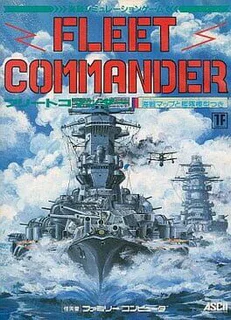
Fleet Commander

Most popular release in Week 5

Fleet Commander

Fleet Commander is a strategy game developed and published by ASCII Entertainment for the Famicom in 1988. It is the first naval battle game ever released for the system. While it supposedly depicts a battle between two fictional countries, the game is largely recognized to be a recreation of one of the crucial naval battles that occurred between Japan and the United States near the end of World War II. Players control a Japanese fleet of heavy cruisers, battleships, submarines and aircraft carriers. A couple of things set this game apart from typical Famicom games. First, in addition to the cartridge and the manual, the game also came packaged with a large map and plastic models which represented ships and airplanes. The game never shows the entire state of the water, so it is up to the player to use the information that he or she has to update the representation of battle on the map using the plastic models. Second, no background music is heard while playing this game. Finally, this game makes use of a device known as the "Turbo File," which was manufactured and sold by ASCII as well. This device was a hardware add-on for the Famicom which was used to save game progress. It was compatible with a number of other titles.

Which platforms saw the most releases?

Family Computer Disk System received 7 new titles in April 1988. The runner up was Family Computer with 7 new titles.

Family Computer Disk System7 releases
Family Computer7 releases
Nintendo Entertainment System5 releases
PC-8800 Series4 releases
Sega Master System/Mark III3 releases
Sharp X12 releases
Arcade2 releases
Apple IIGS1 release
FM-71 release
Apple II1 release

What genres were most popular?

Adventure was the dominant genre in April 1988 with 8 titles. Arcade followed closely with 6.

Adventure8
Arcade6
Strategy5
Shooter5
Role-playing4
Puzzle4
Sport4
Platform4
Simulator4
Visual Novel3