Games Released in March 1989

44 new games released in March 1989, with Family Computer being the most active platform. March 1 was the busiest day, with 6 new releases.
Which days had the most releases?

March 1 saw the most activity with 6 releases.
SunMonTueWedThuFriSat

Wed, Mar 1

6 releases

Thu, Mar 2

No releases

Fri, Mar 3

3 releases

Sat, Mar 4

2 releases

Sun, Mar 5

No releases

Mon, Mar 6

No releases

Tue, Mar 7

No releases

Wed, Mar 8

No releases

Thu, Mar 9

No releases

Fri, Mar 10

No releases

Sat, Mar 11

No releases

Sun, Mar 12

No releases

Mon, Mar 13

1 release

Tue, Mar 14

No releases

Wed, Mar 15

1 release

Thu, Mar 16

No releases

Fri, Mar 17

5 releases

Sat, Mar 18

3 releases

Sun, Mar 19

1 release

Mon, Mar 20

2 releases

Tue, Mar 21

1 release

Wed, Mar 22

No releases

Thu, Mar 23

4 releases

Fri, Mar 24

2 releases

Sat, Mar 25

No releases

Sun, Mar 26

No releases

Mon, Mar 27

No releases

Tue, Mar 28

4 releases

Wed, Mar 29

1 release

Thu, Mar 30

4 releases

Fri, Mar 31

4 releases

How did each week compare?

The third week of March was the busiest with 13 releases.

Week 1 (March 1–7)

11 releases
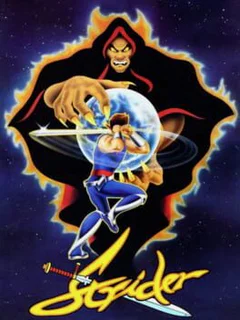
Strider

Most popular release in Week 1

Strider

The controls of Strider consist of an eight-way joystick and two action buttons for attacking and jumping. The player controls Hiryu himself, whose main weapon is a tonfa-like plasma sword known as "Cypher". He can perform numerous acrobatic feats depending on the joystick/button combination used. Pressing the jump button while Hiryu is standing still will cause him to do a regular vertical jump, while pressing the jump button while pushing the joystick left or right will enable him to do a cartwheel jump. Hiryu can also slide under or through certain obstacles and enemies by first crouching down and then pressing the jump button. As well as his sliding move, both jumps can also be used to destroy weaker opponents. Hiryu is able to latch onto certain platforms, and climb across walls and ceilings using a metallic hook. While running down a sloped surface, Hiryu can gain enough momentum to allow him to do a longer cartwheel jump than usual. Numerous power-ups can be obtained from item boxes carried by certain enemies. These includes an extension to Hiryu's attack range that lasts for one hundred slashes, two types of health aids (represented by the kanji used to write Hiryu's name: 飛 and 飛竜), a max health extension (represented by the kanji 竜, the second character in Hiryu's name), an extra life, and a power-up that not only makes Hiryu invulnerable to attack but also increases his own attack abilities via shadow images of himself for 15 seconds.[3] Hiryu can also summon robotic companions known collectively as "options" that help him fight enemies. These consist of up to two mushroom-like droids, a saber-toothed tiger and a hawk, known individually as Option A, B and C respectively. The game has five stages: the Kazakh Soviet Socialist Republic (called "St. Petersburg" during the arcade game's attract sequence), the Siberian Wilderness, the Aerial Battleship Balrog (געלראב), the Amazonian Jungle, and the Grandmaster's lair itself, the Third Moon. Each of the stages is divided into a number of smaller sections, each with their own time limit and checkpoint location. The player has a three-point health gauge (which can be increased to five points with the health extensions. Hiryu will lose a life when either his health gauge is fully depleted, by moving him off the screen entirely (like falling into a bottomless pit) or when the game's timer reaches zero. It's Game Over when all of Hiryu's lives are lost, but the player can be given the opportunity to continue.

Week 4 (March 22–28)

10 releases
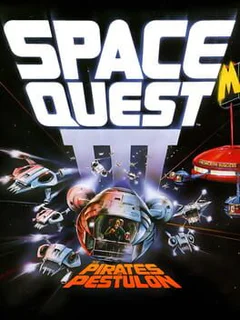
Space Quest III: The Pirates Of Pestulon

Most popular release in Week 4

Space Quest III: The Pirates Of Pestulon

Space Quest III: The Pirates of Pestulon continues the hilarious space-faring adventures of Roger Wilco, the unlikely hero and intergalactic garbageman. In this installment, players must unravel the mystery behind the disappearance of the "Two Guys from Andromeda," the fictional creators of the Space Quest series. As Roger, players navigate through a satirical sci-fi universe, facing off against the nefarious Pirates of Pestulon and possibly other suspects, including overzealous fans and revenge-seeking minions of previous villain Sludge Vohaul. With its blend of point-and-click adventure gameplay, cutting-edge graphics for its time, and trademark humor, Space Quest III challenges players to save the kidnapped game designers and thwart another galactic threat, all while delivering a self-aware, comical take on the adventure game genre and sci-fi tropes.

Which platforms saw the most releases?

Family Computer received 13 new titles in March 1989. The runner up was TurboGrafx-16/PC Engine with 9 new titles.

Family Computer13 releases
TurboGrafx-16/PC Engine9 releases
Sharp X680005 releases
Arcade4 releases
Family Computer Disk System4 releases
Nintendo Entertainment System2 releases
Atari 78001 release
Linux1 release
Sega Mega Drive/Genesis1 release
Amiga1 release

What genres were most popular?

Adventure was the dominant genre in March 1989 with 10 titles. Shooter followed closely with 10.

Adventure10
Shooter10
Role-playing9
Arcade8
Platform7
Sport5
Puzzle4
Hack and slash4
Simulator3
Point-and-click2