Games Released in November 1989

51 new games released in November 1989, with TurboGrafx-16/PC Engine being the most active platform. November 1 was the busiest day, with 9 new releases.

Top Platform

TurboGrafx-16/PC Engine

New Releases

51

Busiest Day

November 1

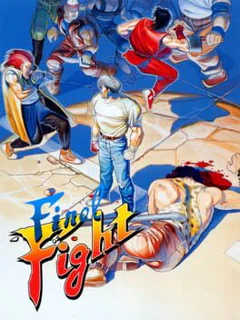
Final Fight

What was the most popular game of November 1989?

Final Fight

Final Fight is a side-scrolling beat-'em-up produced by Capcom. Final Fight can be played by up to two players simultaneously. Before the game begins, the player chooses between the three main characters: Haggar, Cody, and Guy. Each has his own fighting style and attributes. Health gauges are displayed for both player and enemy characters. The controls for Final Fight consist of an eight-way joystick and two buttons for attacking and jumping respectively. Pressing the attack button repeatedly when attacking an enemy or multiple enemies will cause the player character to perform a combo. The final blow of the combo can be changed to a throw if the player moves the joystick in the opposite direction just before landing it. The player can also perform a jump attack. Pressing the attack and jump buttons simultaneously allows the player to perform a special attack that strikes all surrounding enemies, but will drain a small portion of the player's health. Enemies can be grabbed simply by walking into one of them. When an enemy is grabbed, the player can perform a grab attack by pressing the attack button or perform a throw by tilting the joystick left or right. A thrown enemy can be tossed at another for additional damage. Items such as weapons, health recovery items, and items awarding extra points can be picked up by standing over one and pressing the attack button. Weapons have limited uses and will disappear if the player is disarmed by an enemy too much or when the player moves to a new area. Final Fight consists of six stages or "rounds", as well as two bonus rounds. Each round takes place in a different section of Metro City such as the Slums and the Subway, with most rounds featuring more than one level. At the end of each round the player will face a boss character unique to that round.

Which days had the most releases?

November 1 saw the most activity with 9 releases.

How did each week compare?

The fourth week of November was the busiest with 16 releases.
Week 2 (November 8–14)

7 releases
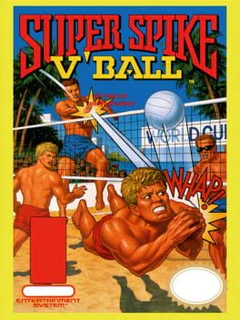
Super Spike V'Ball

Most popular release in Week 2

Super Spike V'Ball

Warm up with a few exercise games then face contenders in the American Circuit. For the ultimate challenge play against the best in the World Cup. Jump and block opponent's spikes, dive to dig a cross court spike, or set one up for a smash that only the best player can return. Kabooom! Your Super Spike blasts your opponent off his feet! "X" marks the spot so you can track the ball. Pick players with speed, strong defense, or killer offense. Your quick reflexes and competitive spirit complete the team. Play against the computer, by yourself or challenge a friend. With the NES Satellite or the NES Four Score any combination of one to four can play - even two vs. two! Now you can play on sand courts from Daytona to Los Angeles. Face off international teams in Hawaii or challenge the hot Navy team aboard an aircraft carrier. Watch the sand fly! Hear the applause. Soak up the rays! It's Super Spike V'Ball for World Class fun!

Week 3 (November 15–21)

12 releases
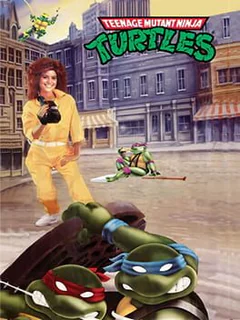
Teenage Mutant Ninja Turtles

Most popular release in Week 3

Teenage Mutant Ninja Turtles

NOTE: This is the original 4-Player Arcade release, not the NES Title. The player chooses from one of the four Ninja Turtles: Leonardo, Michelangelo, Donatello, and Raphael. After Shredder kidnaps the Turtles' friend April O'Neil and their mentor Splinter, they must give chase, save their comrades, and defeat the evil Shredder. The player chooses from one of the four Ninja Turtles: Leonardo, Michelangelo, Donatello, and Raphael. Depending on the version of the game, the characters are either, chosen at the start of the game or assigned by control panel. After Shredder kidnaps the Turtles' friend April O'Neil and their mentor Splinter, they must give chase, save their comrades, and defeat the evil Shredder. Up to four players (two in some versions) can take control of any of the Turtles. Donatello has slower attacks but a longer range, Michelangelo and Raphael have faster attacks but a shorter range, and Leonardo is a well-rounded Turtle with average range and speed. The eight-way joystick controls the movements of the Turtle, the jump button makes them jump and the attack button makes them hit in front of them using their weapon. In addition to this, some combinations are possible. The Turtles can throw Foot soldiers overhead, and by pressing the jump and attack buttons, a special attack is performed. Raphael rolls along the ground and finishes with a kick, while the other Turtles do a sweeping jump attack with their weapons. Turtles can also spring off the wall in certain areas. Enemies can be defeated more quickly by slamming them into walls or solid objects. Many objects such as traffic cones, parking meters, fire hydrants and exploding oil drums can be hit or damaged with attacks in order to help defeat nearby enemies. In the attract mode, the game showed the first part of the cartoon opening, along with a portion of the Teenage Mutant Ninja Turtles theme song. Most of the enemies the Turtles face are the Foot Soldiers, all color-coded to indicate their attack patterns and weapon of choices. Some enemies, such as the standard purple-clad Foot Soldiers and Roadkill Rodney robots, have the ability to restrain the Turtles' mobility and drain their health, leaving the player open to attack for other enemies. The bosses in the game include Rocksteady and Bebop (individually at first in that order, and later the two of them together), Baxter Stockman, Granitor, General Traag, Krang, and Shredder himself.

Week 4 (November 22–28)

16 releases
Final Fight

Most popular release in Week 4

Final Fight

Final Fight is a side-scrolling beat-'em-up produced by Capcom. Final Fight can be played by up to two players simultaneously. Before the game begins, the player chooses between the three main characters: Haggar, Cody, and Guy. Each has his own fighting style and attributes. Health gauges are displayed for both player and enemy characters. The controls for Final Fight consist of an eight-way joystick and two buttons for attacking and jumping respectively. Pressing the attack button repeatedly when attacking an enemy or multiple enemies will cause the player character to perform a combo. The final blow of the combo can be changed to a throw if the player moves the joystick in the opposite direction just before landing it. The player can also perform a jump attack. Pressing the attack and jump buttons simultaneously allows the player to perform a special attack that strikes all surrounding enemies, but will drain a small portion of the player's health. Enemies can be grabbed simply by walking into one of them. When an enemy is grabbed, the player can perform a grab attack by pressing the attack button or perform a throw by tilting the joystick left or right. A thrown enemy can be tossed at another for additional damage. Items such as weapons, health recovery items, and items awarding extra points can be picked up by standing over one and pressing the attack button. Weapons have limited uses and will disappear if the player is disarmed by an enemy too much or when the player moves to a new area. Final Fight consists of six stages or "rounds", as well as two bonus rounds. Each round takes place in a different section of Metro City such as the Slums and the Subway, with most rounds featuring more than one level. At the end of each round the player will face a boss character unique to that round.

Week 5 (November 29–30)

6 releases
Buster Bros.

Most popular release in Week 5

Buster Bros.

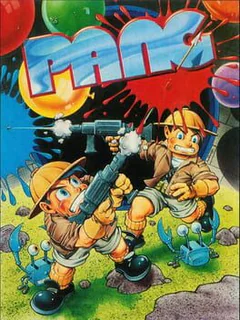
Pang, originally released in Japan as Pomping World and in North America as Buster Bros., is a 1989 arcade action game developed by Mitchell Corporation. Its core gameplay is similar to the 1983 Japanese MSX game Cannon Ball, also released that year for the ZX Spectrum as Bubble Buster. Players embark on a round-the-world quest to destroy bouncing balloons that are threatening landmarks and cities across the globe. The game features 50 stages set in 17 locations, including Mt. Fuji, Mt. Keirin, the Temple of the Emerald Buddha, Angkor Wat, Ayers Rock, the Taj Mahal, Leningrad, Paris, London, Barcelona, Athens, Egypt, Kenya, New York, Maya ruins, Antarctica, and Easter Island. Later versions added additional locations. Each stage includes a background depicting local landmarks, along with a unique arrangement of blocks, some destructible, some permanent, and some hidden with bonus items. Stages begin with balloons of various sizes; the largest balloons split into smaller ones three times before disappearing after the fourth hit. Players start with a single harpoon, though special weapons can drop when balloons are popped. At certain points, food items worth bonus points may also appear. Contact with any balloon results in the loss of a life. In two-player mode, if both players touch a balloon at the same time, only Player 1 loses a life. Similarly, when both reach a bonus or weapon simultaneously, only Player 1 collects it. Players begin with three to five lives depending on dip switch settings, with extra lives awarded upon reaching specific score thresholds. A stage is cleared when all balloons are destroyed, and the game concludes after all stages are completed, ending with the heroes driving their jeep into the sunset on an Easter Island beach.

Which platforms saw the most releases?

TurboGrafx-16/PC Engine received 8 new titles in November 1989. The runner up was Family Computer with 8 new titles.

TurboGrafx-16/PC Engine8 releases
Family Computer8 releases
Arcade7 releases
Sharp X680006 releases
PC-8800 Series5 releases
Nintendo Entertainment System4 releases
DOS3 releases
PC-9800 Series3 releases
Atari ST/STE2 releases
Amiga2 releases

What genres were most popular?

Adventure was the dominant genre in November 1989 with 10 titles. Shooter followed closely with 10.

Adventure10
Shooter10
Arcade9
Sport8
Role-playing5
Simulator5
Strategy5
Visual Novel4
Platform3
Puzzle3